Following a training program, workshop, or year-long course, an artist truly enters the real world of practical learning and earning. In this arena, success hinges on passion, diligence, and an open mind. These qualities enable artists to effectively bridge the gap between theory and real-world execution.
To hone their potential, every artist must choose an initial path that aligns with their comfort zone. For some, this means starting with live anchoring. Others find opportunities reading for visually impaired students or narrating audio blogs. A few voice artists begin by taking on supervision roles. In practice, these entry-level positions are often more focused on coordination—such as aligning a full day’s dubbing or voicing schedule—rather than deep artistic direction. True vocal supervision requires profound knowledge of the target language and a precise understanding of the required emotional expression. Consequently, depending on the client, an artist may encounter overlapping responsibilities or crystal-clear boundaries. Regardless of the structure, these coordination and supervision assignments offer tremendous learning experiences. Alternatively, an artist can dive straight into auditions, provided they maintain an active learning mindset.
Every opportunity, whether voluntary or paid, is a chance to grow. Unfortunately, many newcomers adopt a “knower’s attitude,” which ultimately stifles their ability to learn.
Furthermore, some emerging artists become hyper-focused on the risk of exploitation. Instead of critically evaluating their own skill sets, they worry strictly about compensation. While it is vital to be aware of your commercial worth, you must first build your value through continuous learning to earn that professional respect. Even initial pro-bono or voluntary recording sessions teach essential technical skills, such as microphone technique, studio etiquette, and recording terminology. It also tests an artist’s stamina and capacity for consistent delivery during long sessions. Crucially, studio time highlights personal areas for improvement, whether it is pronunciation, breath control in front of the microphone, or vocal projection.
Hands-on training remains the most effective path to balancing learning and earning. It frequently uncovers latent talents that artists may not realize they possess, such as character voicing.
Ultimately, sitting at home waiting exclusively for high-paying assignments will never provide this essential on-the-job experience. The initial, practical phase of working also helps artists discover their long-term niche. Continuous learning fosters a growth mindset; therefore, expand your skill set as much as possible and practice relentlessly.
Madhavi Ganpule
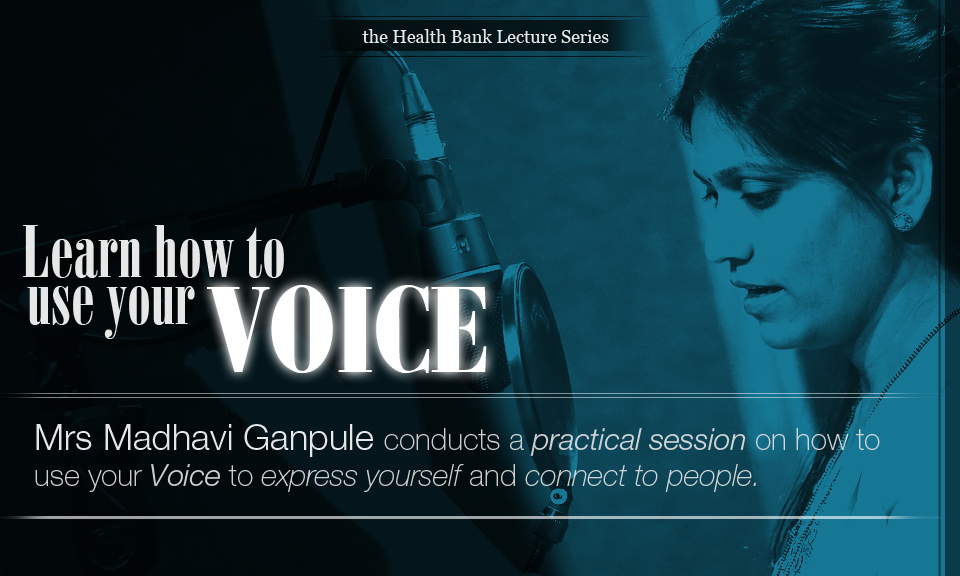
A Special Session on Voice on
2nd August 2016
in Health Bank run by Dr. Alpa Dalal of Jupiter Hospital